Healthy Gallbladder Habits

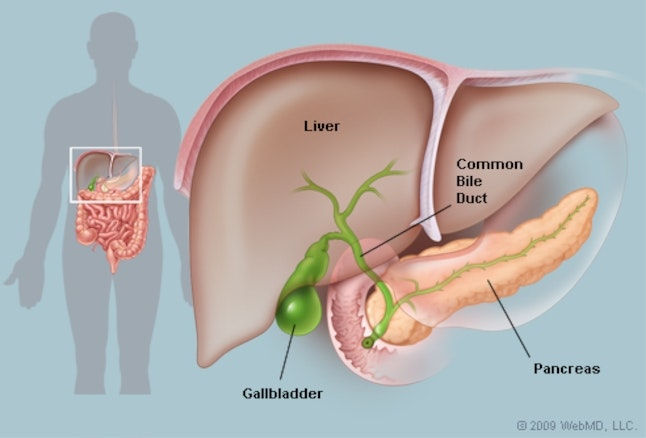
About the Gallbladder
The gallbladder may be small but it is a very important and vital organ. This tiny organ is located in the upper right portion of the abdomen, directly underneath the liver. The most common problem associated with the gallbladder is gallstones & "gallbladder attacks". Every year, more than 500,000 people have surgery to remove their gallbladders, largely due to a Western and SAD diet (Standard American Diet).
The Gallbladder's Role
The Gallbladder is responsible for the storage and concentration of a liquid called "bile" which is produced by the liver. Bile is a greenish-yellow color and it is a solution made of bile acids, water, electrolytes, bilirubin (a yellow-orange pigment that is a result of the breakdown of red blood cells), cholesterol, and phospholipids.
As we eat our food and it enters the small intestine (the upper part of our digestive tract), our hormones and nervous system send signals to the gallbladder so that it contracts and send bile out to the lower part of the small intestine.
The Role of Bile & Why It's Important
Bile is like soap bubbles on grease & performs several functions:
Digests and absorbs fats
Absorption of fat-soluble nutrients (such as Vitamins A, D, E, and K)
Retaining water in the colon to promote bowel movements
Excreting/Eliminating Bilirubin
Eliminating Drugs and other compounds from the body
Secreting various proteins involved in gastrointestinal function
So now you can understand how important the gallbladder and the production, storage, and concentration of bile is really important to our health and how when it is imbalanced, it can result in health problems.
Gallstones, Signs, and Symptoms
Gallstones are formed when the concentration of bile becomes imbalanced, the bile becomes saturated with cholesterol. The stones are actually formed when there is an increase in cholesterol secretion, decreased bile secretion, and then other matters attract cholesterol and the stones begin to form.
Common Causes
Prescription drugs such as contraceptives and synthetic hormone replacement & some cholesterol-lowering drugs
Obesity or rapid weight loss
Constipation
Western diet (high in saturated fat, low in fiber, alcohol)
Food allergies/sensitivities (root cause for gallbladder attacks)
Positive family history
Increased risk from digestive tract diseases, such as Crohn's
Signs & Symptoms
Not sure whether or not you are experiencing Gallbladder symptoms? Well, what's tricky is that often, people go for a while without exhibiting signs of having gallbladder stones (or they are passed), and these symptoms can vary from person to person, but here are some below:
Right-sided abdominal pain (or pain anywhere in the abdomen)
Sudden sharp, persistent pain (gallbladder attack)
Radiating pain that goes to the right shoulder
Frequent Bloating, gas, belching
Recurring stomach pain
Fever, Nausea, and vomiting
If you are ever unsure where your discomfort is coming from, please visit your primary physician so they can perform the right test! Ultrasound and x-rays are often used to identify and diagnose gallstones.
Common Treatments for Gallstones
If Gallstones are present and causing pain they may require surgery (laparoscopy), oral bile acids/salts (for stones that are not yet calcified), or lithotripsy (using shock waves to break up stones so that they pass).
If the gallstones are asymptomatic (without symptoms or pain), there are lifestyle changes, dietary, and supplements that can prevent the further formation and encourage passing.
Recommended Test to determine reasons for Gallstone Attacks:
Food Allergy/Sensitivities -blood or electrodermal
Stool Analysis - to analyze fat digestion
Essential Fatty-Acid balance - blood test
What to Eat for a Healthy Gallbladder
Gallbladder Staples
Eat or drink more of the following:
Beets, Globe Artichokes, and Organic Dandelion Greens improve bile flow
Eat plenty of low glycemic (low in natural sugar) fruits
Olive Oil improves bile flow and can be used on salads regularly
Flaxseeds are highly concentrated in essential fatty acids and help in reducing inflammation. They are also high in fiber! Read about how to incorporate them here.
Well-cooked green veggies. Use olive or coconut oil for cooking
Fiber-rich foods (whole grains like brown rice, cooked leafy green veggies (kale, broccoli, spinach, Brussel sprouts, collards) beans, nuts, and seeds - Just not too many in one setting to avoid digestive discomfort.
Warm lemon water in the morning to stimulate the digestive system, liver, and pancreas enzymes.
Work your way up to drinking at least 8 full glasses of bottled water daily.
Eat Less or Avoid the Following Foods (Pre and Post- Surgery)
Fried Foods
Dairy Products and Red Meat (foods with a high percentage of saturated fat)
Refined, Simple Carbs and Sugars (Click here for the Guide to Simple vs. Complex Carbs here)
Wheat and rye
Hydrogenated Fats or Partially Hydrogenated Fats
Cold drinks that dampen the digestive fire.
Foods that cause an allergic reaction (you can narrow these down with a food allergy test by Everly Well or Orig3n) Common allergies in multiple studies were: eggs, pork, poultry, onions, citrus fruits, milk, coffee, corn, beans, and nuts. These allergies can cause inflammation and swelling of the bile duct and can restrict or impede the contraction and flow of bile.
Supplement Recommendations (No Gallbladder Removal)
Be sure to consult your primary physician before implementing supplements to your regiment to make sure they will not interfere with current prescription medications.
Milk Thistle (420mg) - this increases bile flow and decreases bile cholesterol concentration
Vitamin C (500 - 1,000mg) 3 x day - required to convert cholesterol into bile
Fish Oil ( Enteric Coated, 480mg of EPA and 360mg of DHA) 2 x day or Flaxseed Oil - to reduce inflammation and prevent gallstones.
Full Spectrum Digestive Enzymes - to aid in the digestion of carbohydrates, fats, and proteins, and decrease allergies. Look for the following ingredients: Amylase, Beta-Glucanase, Protease, Lipase, Glucoamylase, Cellulase, Chitosanase, Phytase, Pectinase, Xylanase, Acid-Stable Protease, Malt Diastase (Maltase), Alpha Galactosidase, Invertase, Peptidase, Hemicellulase, Peptidase DPP-IV., Betaine HCL. Note: a lot of digestive enzymes now have probiotics such as Lactobacillus Acidophilus. These are good bacteria and are helpful in the metabolism of cholesterol and bile acid.
Life After Gallbladder Removal Surgery (Cholecystectomy)
Life after gallbladder removal is different for everyone. Some patients are able to make a few dietary alterations like those listed above and be symptom-free. However, that is not the case for everyone and there are common discomforts such as diarrhea and sometimes IBS.
Diarrhea
Diarrhea is often experienced after the gallbladder is gone because there is nothing to regulate the release and distribution of the amount of bile that is released into the small intestine. Now that there is more bile that is released, it may make the stool more watery and occur frequently.
Ongoing upper abdominal pain
Experiencing episodes of light-moderate pain after surgery is common. If you still experience upper abdominal pain (moderate to severe) and it becomes persistent (lasting 30 minutes usually after eating) be sure to let your doctor know. This may be due to the fact that the valve in the small intestine (called the Sphincter of Oddi) may not be relaxing and doesn't allow the bile and pancreatic enzymes to enter or release from the small intestine causing an excess of fluid.
This particular dysfunction (Sphincter of Oddi Dysfunction-SOD) is uncommon but should be ruled out by your doctor to make sure there is nothing further needed or receive an accurate diagnosis.
Lifestyle and Dietary Changes Post-Surgery
To make strides in feeling your best and enjoying life post- removal of your gallbladder try implementing the following:
Follow the dietary and food recommendations as listed above, as well as the foods to avoid
Order a Food Intolerance/Allergy test to narrow down and identify what your body may not agree with or digest well
Eat smaller meals, and base the frequency upon what you need.
Chew food well, and eat in a calm relaxed state.
Incorporate Digestive Enzymes 1-2 weeks after surgery.
Incorporate a Soil Based Probiotic 2-3 weeks after surgery.
Implement Chamomile tea to ease stomach pain.
Learn to relax and manage stress, implementing deep breathing.
Look to healing your gut and nourishing your liver, adapting the GYG Way of Eating.
Resources: 1. Prescription for Natural Cures. Third Edition. Stengler, M. Balch, J. Balch, R.
2. Signs and Symptoms Analysis for a Functional Perspective. Weatherby, D.
3. The Encyclopedia of Natural Medicine. Third Edition. Murray, M. Pizzorno, J.
3. "What to Do About IBS after Gallbladder Removal Surgery."


Comments